

One day you have an award – and the next, it is terminated without prior notice. This is the scenario numerous recipients find themselves confronting. Practically, there are human resources, revenue, cost share, contractual, and reporting impacts. From the compliance standpoint, allowability and closeout matters rise to the top along with asset disposition. Then there is the question of, “What about future costs required by statute or regulation, like audits and indirect cost rate adjustments?” These requirements do not get waived automatically because an award is terminated. Collectively, known and potential future award terminations create an environment of uncertainty that can derail multiple aspects of an organization’s operations and long-term plans.So, how does one manage these risks?
During this session, we will clarify differences between suspensions and terminations, discuss recipients’ responsibilities once notified of a termination, identify methods to classify allowable, reimbursable costs once a termination has been announced, identify key steps that drive toward liquidation of obligations and closeout of awards, and conclude with a discussion regarding appeal options. Each attendee should leave the session with a better understanding of potential impacts and how to plan for and mitigate related risks related to terminations.
Key Takeaways:
- Identify justifications for award terminations under the Uniform Guidance.
- Discuss the types of costs that are allowable and reimbursable.
- Brainstorm risks related to liquidations and closeout and associated mitigation strategies.
- Recall options to appeal award terminations.
This session is ideal for Grants Managers, Finance Directors, Legal Counsel, Program Managers, Budget Analysts, Finance Managers, Procurement Officers, Auditors, Risk Analysts.
YOUR EXPERT:
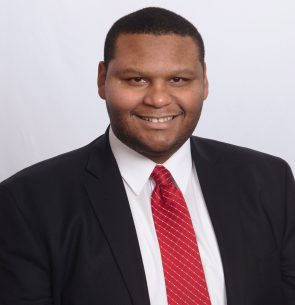 Eric Russell
Eric Russell is a Consulting Services Director with Macias Gini & O’Connell (MGO) LLP based in Columbus, Ohio. He is responsible for regulatory compliance engagements working primarily with state and local governments and nonprofit organizations. Over the course of his 15+ year career dedicated to public sector service, he focuses on federal grants and contracts, audit readiness and response, asset management, and public financial management. He has worked with entities nationwide and abroad with a focus on housing and community development, transit and transportation, education, and energy and utilities.
During the course of his career, Eric has served as a deputy finance director for the City of Columbus (OH) responsible for grants and asset management, a director at ENJ PLLC leading client engagement delivery and business development, senior manager for Crowe LLP leading public sector audit, consulting, business development, diversity, and people development matters, and a budget and management analyst for Metro Nashville (TN) Government. Eric has been responsible for and led more than 100 financial and compliance audits conducted on behalf of offices of inspectors general, numerous forensic analysis and risk management/assessment engagements, and internal audit activities for clients within the United States and abroad.
Eric previously served as president of the National Grants Management Association’s (NGMA) Board of Directors as well as president of The Ohio State University John Glenn College of Public Affairs’ Alumni Advisor Board. He is a current member of the Thompson Grants Advisory Editorial Board. Eric is a proud alumnus of OSU’s John Glenn College and of Stetson University’s School of Business Administration.
Delivery Method: Group Live
Program Knowledge Level Policy:
The sponsor assures that the program content and program level is appropriate for the intended participants. The knowledge level of the course must be specified so that participants can determine if the program is appropriate for their development needs. Knowledge levels consist of: basic, intermediate, advanced, overview and update. All programs must clearly identify prerequisite education, experience and advanced preparation. A course knowledge level of intermediate, advanced or update inherently has an education or experience prerequisite, which should be included in the program descriptive materials. CPE Standard Reference: Standard 2 and 3.
Refund Policy:
If you are not able to attend for any reason, please notify us as soon as possible. Cancellations received 24 hours prior to the start time of the audio conference are fully refundable. After that, cancellations are subject to a $25 processing fee. If you prefer, you may substitute an upcoming audio conference for the one you originally registered for and avoid the $25 processing fee. All refunds resulting from cancellations will be issued within 72 hours.
Complaint Resolution Policy:
Participants are encouraged to submit complaints as soon as possible to ensure timely resolution. Complaints must include the participant's name, program name, date of the program, and a clear description of the issue. Complaints can be submitted through the following methods:
- Email: afaye@columbiabooks.com
- Phone: 1-800-677-3789
- Mail: Thompson Grants, a division of CBIS, 1500 Wilson Boulevard, Suite 920, Arlington, VA 22209

CONTACT
 Headquarters
 1.800.677.3789
- Contact Us
Copyright © Thompson Grants, a division of CBIS. All rights reserved.