

Understanding indirect costs is key to achieving full cost recovery and sustainable grant management — yet many organizations struggle to navigate the complex requirements involved. This session, led by Paul Calabrese, Principal at GRF CPAs & Advisors, provides a step-by-step overview of how to develop and apply an indirect cost rate under the Uniform Guidance (2 C.F.R. Part 200). Participants will explore how to identify direct versus indirect costs, the principles behind cost allocation, and how to develop a compliant indirect rate structure tailored to their organization’s operations and funding sources.
In addition, attendees will learn practical strategies for documenting costs, preparing supporting materials for rate negotiations, and avoiding common pitfalls that can lead to audit findings or disallowed costs. Whether you’re new to grant accounting or looking to refine your organization’s indirect cost practices, this session will equip you with the tools and confidence to recover your fair share of administrative resources.
Learning Objectives:
- Understand the fundamentals of direct and indirect costs under the Uniform Guidance
- Explore the basic mechanics of indirect rate calculation and application
- Identify the documentation and data needed to prepare an indirect cost rate proposal
- Examine the four methods of allocating indirect costs and when to apply each
- Learn best practices for compliance, recordkeeping, and communication with federal agencies
Who Should Attend:
This webinar is designed for public accountants, consultants, government contractors, and recipients of federal grants and cooperative agreements, including nonprofits, institutions of higher education, hospitals, and federal, state, local, and tribal governments. It will be especially valuable for Directors of Finance, Controllers, CFOs, COOs, Grants Managers or Administrators, and staff in development, compliance, and budgeting roles.
YOUR EXPERT:
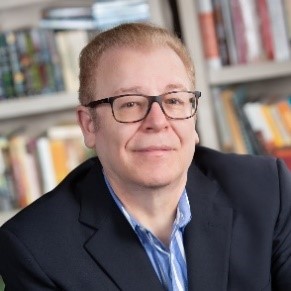 Paul Calabrese
Paul Calabrese has hands-on experience with the Uniform Guidance for Federal grants recipients: nonprofits, universities, hospitals, and state/local/tribal units of governments.
His skill-set involves: grant cost accounting, sub-recipient monitoring, preparation of over (100) indirect rates / NICRA for several Federal agencies, developed policies and procedures, medical management systems invoicing to state Medicaid agencies and toolkit for unit cost rates for Ryan White HIV AIDS HRSA awards. Paul has expertise in developing NICRA rates for USAID. He has performed out-sourced CFO duties, annual budgets, cash flow projections, grant draws and budget monitoring. He is a prolific speaker on Uniform Guidance (UG) topics.
Delivery Method: Group Live
Program Knowledge Level Policy:
The sponsor assures that the program content and program level is appropriate for the intended participants. The knowledge level of the course must be specified so that participants can determine if the program is appropriate for their development needs. Knowledge levels consist of: basic, intermediate, advanced, overview and update. All programs must clearly identify prerequisite education, experience and advanced preparation. A course knowledge level of intermediate, advanced or update inherently has an education or experience prerequisite, which should be included in the program descriptive materials. CPE Standard Reference: Standard 2 and 3.
Refund Policy:
If you are not able to attend for any reason, please notify us as soon as possible. Cancellations received 24 hours prior to the start time of the audio conference are fully refundable. After that, cancellations are subject to a $25 processing fee. If you prefer, you may substitute an upcoming audio conference for the one you originally registered for and avoid the $25 processing fee. All refunds resulting from cancellations will be issued within 72 hours.
Complaint Resolution Policy:
Participants are encouraged to submit complaints as soon as possible to ensure timely resolution. Complaints must include the participant's name, program name, date of the program, and a clear description of the issue. Complaints can be submitted through the following methods:
- Email: afaye@columbiabooks.com
- Phone: 1-800-677-3789
- Mail: Thompson Grants, a division of CBIS, 1500 Wilson Boulevard, Suite 920, Arlington, VA 22209

CONTACT
 Headquarters
 1.800.677.3789
- Contact Us
Copyright © Thompson Grants, a division of CBIS. All rights reserved.