


NACo Gathers To Address Transportation Reauthorization Priorities
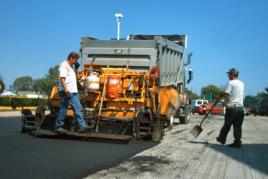
Simply put, Congress has a year to reauthorize a transportation infrastructure package. However, as congressional leaders from both sides of the aisle fail to see eye to eye on many issues, one may want to refer to the often-misquoted line from the movie “All About Eve” and say, “Fasten your seatbelts. It going to be a bumpy ride.” This situation has, well, “driven” numerous county leaders to Washington, D.C. to voice their concerns.
The National Association of Counties (NACo) recently held a “transportation-focused fly in” with county leaders from 15 states to discuss the key priorities for counties in the next surface transportation reauthorization bill. The current bill expires on Sept. 30, 2026, and the reauthorization process is currently underway to create the next multiyear bill, which will set funding levels and priorities for the coming years. NACo, in a news brief on its website, said that its priorities focus on five key areas:
- Increasing access to federal formula funds to better align with the volume of infrastructure owned and maintained by counties. NACo said that local governments receive 14% of federal formula funds, despite counties owning more than a quarter of federal-aid highway miles and almost half of the nation’s poor-condition bridges. It explained that expanding programs like the Surface Transportation Block Grant program, while requiring suballocation of programs like the Bridge Formula Program, would empower counties and other local governments to use important federal formula dollars for critical projects in their communities.
- Preserving and improving discretionary grant opportunities to ensure that these opportunities remain available for counties to undertake essential, county-led infrastructure projects, while also reducing those programs’ administrative burdens and barriers to entry.
- Improving planning and the project selection process to ensure that federal formula dollars intended for local control are actually used for locally led, locally selected projects.
- Funding rural planning by providing federal funding for Regional (or Rural) Transportation Planning Organizations. NACo noted that only areas with populations more than 50,000 now receive federal funding for planning organizations, creating disparities between urban and rural communities
- Reforming the environmental review process by eliminating overly burdensome elements of the federal permitting system that drive up costs and limit the impact of federal funding. County projects with low costs or within existing rights-of-way, in particular, should not be subject to the same level of permitting scrutiny as new starts, according to NACo.
"Every year, county governments invest more than $146 billion of our own funds into infrastructure and an additional $60 billion into transportation," said NACo Executive Director Matthew Chase. "Restrictions on local fiscal authority limit our ability to spend further, and yet our infrastructure lags behind. Counties are asking for increased, direct federal investment to support the bipartisan goal of having a world-class transportation system."
NACo previously sent letters to the to the House Committee on Transportation and Infrastructure and the Department of Transportation outlining its policy priorities for the next surface transportation reauthorization bill.
Nothing happens easy in Washington, D.C. these days. It will be interesting to see what happens over the next several months.
Join us for our following Thompson Grants event:
Federal Grants Forum | Nov. 11-12, 2025 | Orlando, Fla.

